


Top Regions in Brazil for Real Estate Investments 2025

Brazil is experiencing a real estate boom in 2025 – but this growth is not distributed evenly across the country. While some regions are showing explosive price increases, others are growing more moderately. For German investors, the key question is: Where is investment most worthwhile? This article provides a comprehensive overview of Brazil’s top real estate regions from an investor’s perspective. You’ll learn which locations stand out, what makes them attractive, and how you, as a foreign buyer, can benefit from these opportunities.
Boom in the Northeast: Sun, Beaches, and Growth
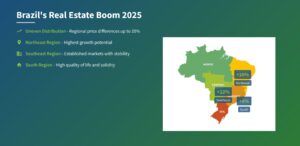
Northeastern Brazil has moved into the spotlight in recent years, with coastal cities posting massive property value increases. Leading the way are Salvador da Bahia and Fortaleza. According to market indices, Salvador saw a price increase of over 20% within a year. This is driven by a strong tourism sector, cultural heritage, and major infrastructure investments. Fortaleza impresses with its beaches, growing infrastructure, and attractive pricing.
Recife also deserves special attention. This capital city in the state of Pernambuco saw an astonishing increase in the number of new residential projects in early 2025. Contributing factors include a government-supported housing program (Minha Casa, Minha Vida), local economic growth, and strong internal migration trends.

The region as a whole benefits from:
-
Year-round tropical climate
-
High tourist demand
-
Expanding middle class
Investor Tip: Focus on neighborhoods with both tourist appeal and year-round local demand (e.g., areas near universities or business hubs). Evaluate infrastructure improvements (new airports, ports, road expansions) to gauge future potential.
Southeast Brazil: Established Markets – São Paulo and Rio
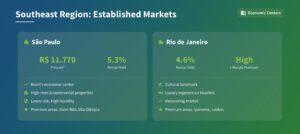
The Southeast is home to Brazil’s economic powerhouses São Paulo and Rio de Janeiro.
São Paulo is Latin America’s largest real estate market. Here, condominiums dominate, despite lower annual percentage growth, São Paulo offers:
-
High liquidity
-
Stable returns
-
Strong rental markets
This makes it ideal for investors seeking long-term security rather than speculative gains.
Rio de Janeiro offers a more diverse profile. Its luxury segment (e.g., Ipanema, Leblon, Barra da Tijuca) is regaining momentum post-COVID. Tourism has recovered strongly, fueling short-term rental income. However, Rio’s volatility and varying neighborhood safety levels require extra due diligence.
Investor Tip:
-
In São Paulo: Focus on proximity to metro lines and commercial districts.
-
In Rio: Prioritize security and infrastructure. Stick to Zona Sul for safer, more stable investments. Always assess local regulations regarding short-term rentals in condos.
Southern Brazil: Stability, Quality, and Lifestyle Appeal
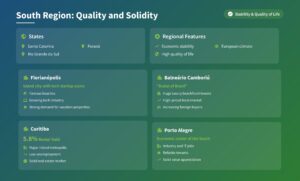
Southern states like Santa Catarina, Paraná, and Rio Grande do Sul are known for:
-
Economic stability
-
High living standards
-
European-style climate and culture
Cities like Curitiba, Porto Alegre, and especially Florianópolis offer high-quality residential and vacation real estate.
Florianópolis is particularly attractive with:
-
Over 40 beaches
-
Tech/startup presence
-
High demand for vacation rentals
Balneário Camboriú, another southern hotspot, is famous for its skyline of luxury beachfront towers – often dubbed the “Dubai of Brazil.”
Investor Tip:
-
South Brazil is excellent for conservative investors.
-
Combine a stable rental property in Curitiba with a vacation apartment in Florianópolis for a balanced portfolio.
-
Be cautious of overbuilding in tourist hotspots – check off-season occupancy rates.
Interior Cities – Hidden Gems for Experienced Investors
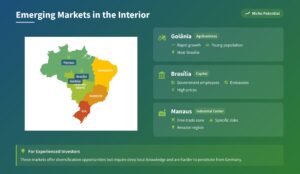
Beyond the coast and big cities, inland cities like Goiânia, Campinas, and Brasília also offer opportunities. Brasília, for example, has a niche market tied to embassies and government workers, while Goiânia is booming thanks to agribusiness and a young population.
These markets are:
-
Less liquid
-
Less known internationally
-
Sometimes volatile
But for investors with local partnerships and deeper market knowledge, these undervalued cities may offer first-mover advantages.
Investor Tip: Research thoroughly. Look for signs of population growth, new universities, or industrial investments. Only invest in areas where demand is already visible or guaranteed.
What German Investors Should Always Consider
No matter the region, there are key rules for investing in Brazil:
-
CPF required: A Brazilian tax ID (CPF) is essential for any property transaction.
-
Legal support is a must: Hire a local real estate lawyer to handle contracts and property registration.
-
Exchange rate impact: The Brazilian Real (BRL) is volatile. Consider transferring funds in tranches or monitoring favorable exchange windows.
-
Double taxation treaty: Germany and Brazil have an agreement – taxes paid in Brazil (e.g., 15% on rental income) are credited against your German taxes.
Practical Steps for Getting Started
-
Explore the market: Use portals like ZAP Imóveis or VivaReal to check listings and price trends.
-
Build a network: Join expat or investor forums, connect with agencies like Koch & Kollegen that offer bilingual support.
-
Plan a scouting trip: Visit your target city, walk neighborhoods, and talk to locals and realtors.
-
Secure your financing: Most foreign investors buy in cash. Some developers offer installment plans.
-
Start small: Consider a single apartment in an established area for your first investment.
Conclusion

Brazil’s top regions offer German investors a compelling mix of:
-
Strong growth potential in cities like Salvador, Fortaleza, and Recife
-
Stability and quality of life in southern cities like Curitiba and Florianópolis
-
Established and liquid markets in São Paulo and Rio de Janeiro
The key to success is understanding regional differences and adjusting your strategy accordingly. With sound planning, reliable local partners, and market research, your investment in Brazil can be secure, profitable, and even personally rewarding.
Seja bem-vindo! – Welcome to Brazil!